
Today's National Summit on 21st Century Skills is being held "live" in Washington DC and "LIVE" online at the P21 Cyber Summit.
NOTES from National Summit. (excuse typos and speed typing) :-/
- Introduction with Framework for 21st Century Skills
- Ray Suarez, NewsHour (Moderator) -
Emily DeRocco - US Chamber of Commerce
- technology advances have shifted the manufacturing workspace to an environment where works have to know advanced skills, education and knowledge that workers bring to the 21st century manufacturing work space.
- manufactures have identified the skills required - personal effectiveness skills, academics, industry tech skills; levels of competencies in education for manufacturing workforce
- must include these skills in our education curriculum
Emily DeRoco (National Assoc. of Manufacturers)
- school system needs to prepare workforce with skills needed for small business and larger organizations
- what do employers want that the are not finding? Employers want people who can THINK. Also includes P21 skills.
Steve Pain - WV Dept. of Ed
- How do we grow cognitive demand while building 21st century skills
- How do we grow teachers knowledge to apply 21st century skills
Patrick Gaston - Verizon Foundation
- What kind of people does Verizon need; how is it different from 25 years ago
- Technology has changed; customer needs has changed
- employee of today needs critical skills we need for today
- individuals needed to be able to work independently
- communication, motivation, collaborative skills
- eliminate redundancies in the system
Tony Wagner
- problem is not just finding the right teachers, but having the right mission
- not just about workforce readiness; redefining what it means to be an educated adult in the 21st century
- skills have converged
- this is not a teacher workforce problem; problem is defining the goals for today's goals
- transform the nature of the teaching job to teaching as a team
- get clear about the goals; get clear about working conditions
- rethink what the teachers work is and how they work collaboratively
- In Finland, teachers spend 10-20% in front of students; the spend their time working as teams
- what does teaching need to look like? if you get clear about goals in education; align a system of teacher preparation, assessment and pd around that, you get dramatic results
Emily DeRocco
- what are drivers in business success? Innovation - not only in product, but corporate structure, technology, customer service, the companies ecosystem
- give workers skills and education to be a mobile and productive member
- individual change jobs 7-10 times; not just jobs / careers
Patric Gaston
- 200 M dollars on education literacy skills spend - verizon
Lydia Logan
- people who are applying to be journeyman are not passing entrance exams
- what is required for an entry level job is very different across the board
- myth of high skill / low skill is not the question
- are you equipped to think, option to change jobs, adapt
- we are eliminated options for job opportunities
- how do we prepare our citizens for opportunities that come along
Patrick Gaston
- P21 as a forum to discuss these issues and how we integrate training, pd, how we hire, prepare workforce
- do leadership /execs have the skill sets that reflects our marketplace
Tony Wagner
- how do we take this P21 'rainbow' and make actionable?
- Greatest gap: critical thinking, communication and collaboration (3 cornerstones)
- 1 actionable item - how do you assess critical thinking; not on state assessment; evidence students have mastered this skill
- we need assessments for critical thinking skills
Steve Paine
- as collective body, use political capital to move legislation
- kids want skills (critical thinking) and technologies
- Our national assessment for the last 8 years has been a mockery
- we need accountability in our system, assess critical thinking skills
- embed performance skills that work, bring skills to all learners/teachers, bring to manufacturing sector
Emily DeRocco
- it is more than content; it's about 21st century skills (curriculum, pd, assessments)
- how do manufacturers and educators work together to bring forth effective knowledge workers?
How can we address the diversity and change in population?
Tony Wagner
- (3-10) students won't go to college
- 1 in 3 Caucasian students graduate from college and are productive citizens
- 1 in 6 hispanic students graduate college and progress
- we have a belief to be college ready means more content means more prepared for college
- kids need the skills to make it in the workforce
- ensure all kids graduate from high school
- kids must be career, citizenship and college ready
Leaving skills not prepared for 21st century learning, it is a lifetime of low wage opportunities
Lydia Logan
- employers care about content knowledge and critical thinking skills; rigor is important
Tony Wagner "Accountability 2.0"
False argument - skills vs. content
Audience reactions:
- every other month our department gets together to talk (voice of teacher)
Steve Paine
- Global 21. Need to voice the message and carry it out to community.
How do you learn in the 21st century?
Tony Wagner
- this generation is very differently motivated to learn and to work
- Global achievement and global learning gap
How much change are you seeing from Ed schools? Very little
Is our economy a "winner take all" economy?
National Student Clearinghouse
- we need to track kids in college and in the workplace
Community colleges have stepped up to the plate on workforce and getting students ready for careers
- K12 is hard to crack; how do we get more aligned as manufacturers to K12?
-
Friday, June 12, 2009


Thursday, June 11, 2009
T3 notes from @wfryer
I pulled this out of the notes taken by @wfryer regarding T3 (Target Tech in Texas) which is the artist formally know as E2T2 in Texas. Wes provides a great deal of insight and summary information around the grant opportunity. Read more.
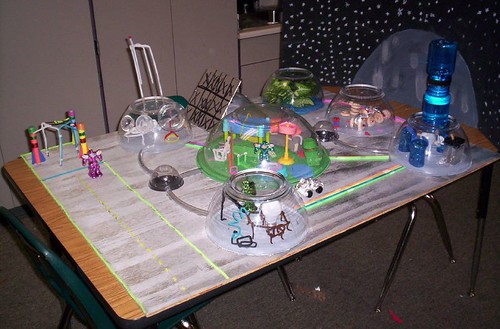
In a 21st Century classroom:
- Students have access to appropriate technology and digital resources for technology-integrated curriculum activities on the campus, in the district, at home, or at key locations in the community.
- Teachers seamlessly integrate technology in a student-centered learning environment where technology is used to solve real-world problems in collaboration with business, industry, and higher education.
- Teachers and students apply technology across all subject areas to provide learning opportunities that are not possible without the technology.
- Teachers create and integrate web-based lessons that include TEKS-based content, resources, learning activities, and interactive communications that support learning objectives throughout the curriculum.
Wednesday, June 10, 2009


Tuesday, June 9, 2009
Wait No More
 Gone are the days when we waited to read about the latest happenings on Yahoo, Google, ZDNet, or your other favorite news & search resource. You will tell your children and grandchildren..."remember when we had to wait to read about it online minutes after it happened?" Your parents will say...'Why, I remember when we had to wait to hear it on the 5 o'clock news."
Last year I participated in the WWDC twitterverse and instantaneously heard the news of the iPhone release, app store as it was happening. It was so amazing to get the news just seconds after Apple made the announcements at the live event. It was as though we were getting it even before CNN could poston their program or other well-known broadcasts either on TV or online. And the best part, it was coming from average folks like you and me sharing their tweets to all us iPhone junkies waiting for the announcements.

Yesterday was no different, but I did seem to get a better handle on it and even got information quicker if you can believe that. Tapping into Ustream, me and so many others, were able to tap into a live video feed of the WWDC as it was happening live. Even the tweets couldn't catch up with that. Again, everyday folks, albeit tech types, were sharing their video stream, probably running off of their jailbroken iPhone, with the rest of the world. Further, sites like Engadget, and Gizmodo were sharing images as the slides were being shared live. So even if the video was grainy at best, the images on the blog sites were crystal clear. To play it out further, I used the search function on Twitter to aggregate the #WWDC twitter feeds as they came by. I was amazed that at any given time, an average of about 250 tweets every five seconds were coming across the screen. It was truly mind blowing.
What an amazing experience and a long way we have come... It was as though I was actually there in San Francisco. And, seconds, minutes later, the rest of the web was able to post all the same things I heard right to their websites. Later that day, news stations shared their remarks about the price of the iPhone and it's capabilities. By then, it was old news and best of all, I didn't have to sit through bad commercials.
What a truly extraordinary day. To not only get content anytime, anywhere, but just as it is happening in all forms... from video, to status updates, to tweets, to blog images and comments and the list goes on... truly amazing.
So here's what I used to engage in the WWDC experience:
1. http://live.gizmodo.com/ - this gave me access to the images and comments as they appeare. (A bit delayed.. about 2-5 seconds; very slow according to our standards today.)So if this can all be done around our education system, why can't we do it within our system, or better yet, create a new system? Today's learners and leaders all around us are doing these very skills. If we are truly to be a 21st Century learner and 'globally aware,' we need to take advantage of what is going on around us. Virtual learning, anytime access and content ready for teachers and students is the mode of operation for learners today. Textbooks and limited access is not going to drive us into the 21st century.
2. http://search.twitter.com/search?q=WWDC - formally known as 'summize.com,' I used this twitter aggregator to get all the latest tweets from followers and their reactions.
3. http://www.ustream.tv/ - last but not least, i used the Ustream channel that was being broadcasted live on the show floor. Audio was great.
All this being said, I will admit, I am an rookie at this live tweet, Ustream, blog experience. However, I also want to share that this is not something I went to school for or received in-depth training on. This experience, or 'skill,' was acquired through trial and error, practice and following best practices of practitioners and others who have engaged in these experiences before. Through participation in social communities, reading blog posts, following Twitter members, reading and watching live videos and podcasts, many of the skills to acquire the information yesterday was self taught or learned through the online community. These are the experiences that our students are doing at home and outside the firewalls.
Today's learners will not wait anymore for us to catch up.
Tune into the P21 Cyber Summit to participate with thought leaders and educators who are pushing the envelope to get our students prepared for 21st Century learning.
Sunday, June 7, 2009


Saturday, June 6, 2009
3r's & the 7c's
The focus on information and innovation begins with the foundation of knowledge and skills and the support systems to think critically—21st Century Learning.
Subscribe to:
Posts (Atom)


 Posts
Posts


